This page contains affiliate links, and if you make a purchase through one, we may earn a commission at no extra cost to you.
There’s a common assumption that “legal” paternity tests must be more scientifically rigorous than at-home tests — more accurate, more thorough, a better test. That’s not actually true, and it’s worth clearing up directly: when both are run through an accredited lab, the underlying DNA science is identical. The real difference is entirely about documentation and what the result can be used for, not about accuracy.
The Science Is the Same Test
Both at-home and legal paternity tests analyze the same genetic markers using the same laboratory methods — typically 16 to 20+ STR (short tandem repeat) genetic markers compared between the alleged father and child. Run through an AABB-accredited lab, both formats deliver the same 99.99%+ accuracy for confirming paternity and effectively 100% for excluding it. The lab equipment, the science, and the statistical confidence are not different between the two formats.
What Actually Differs: Chain of Custody
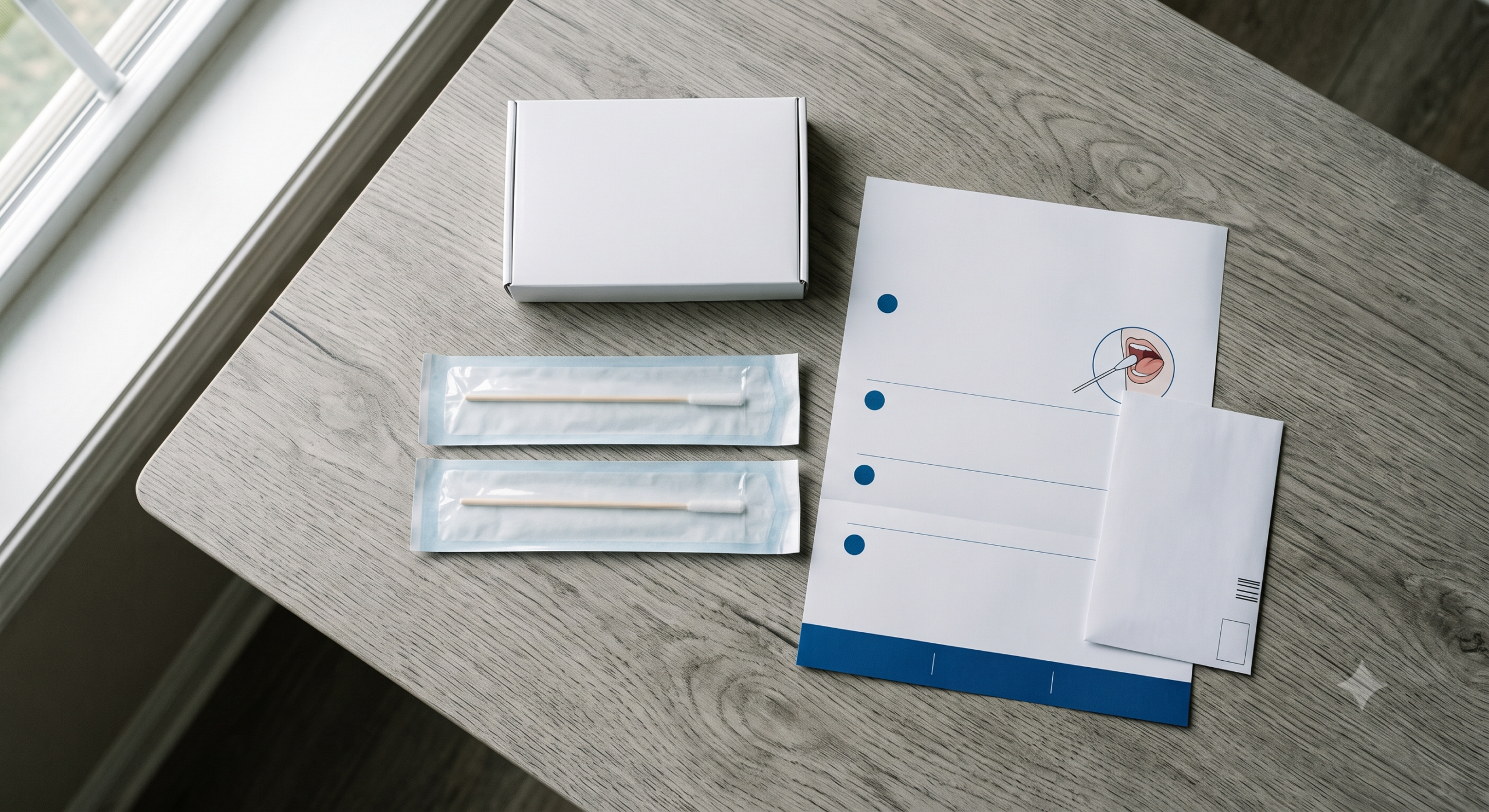
The real difference is entirely procedural. A legal paternity test requires a documented chain of custody: samples are collected by a neutral third party (not the parents themselves), photo ID is verified for all tested parties, and the collection process is documented in a way that can withstand scrutiny in court. An at-home test skips this — you swab your own cheek and a child’s cheek at home and mail the samples in yourself, with no independent verification of who actually provided the sample.
That documentation gap is exactly why at-home results aren’t admissible in court, for child support proceedings, custody cases, immigration applications, or updating a birth certificate — not because the DNA analysis is somehow less trustworthy, but because there’s no independently verified record of whose DNA was actually tested. A judge or government agency has no way to confirm the swab actually came from the people named on the results.
Which One Do You Actually Need?
- At-home (“peace of mind”) testing fits: personal curiosity or confirmation with no legal proceeding involved — you just want to know, and you don’t need the result to hold up anywhere official.
- Legal testing is required for: child support establishment or modification, custody or visitation proceedings, immigration petitions requiring biological relationship proof, updating or establishing a birth certificate, inheritance or estate matters, and any other situation where a court or government agency needs to rely on the result.
A practical note worth knowing before you order: if there’s any real chance you’ll need the result for a legal purpose later, it’s worth paying for legal testing from the start. An at-home result, however accurate, generally can’t be “upgraded” to legal status after the fact — you’d need to retest under proper chain-of-custody procedure, which means paying for both tests instead of one.
Where to Get Either Type Done Right
The accreditation is what matters regardless of which type you need — confirm AABB accreditation before choosing a lab for either format. Our full Paternity Lab Review covers their accreditation, accuracy track record, and how their process handles both formats. See Paternity Lab’s current testing options to compare at-home and legal pricing directly.
Frequently Asked Questions
Can I use an at-home result to convince someone informally, even if it’s not legally binding?
Yes — for informal purposes (settling a personal question, informing a family decision that doesn’t involve courts or government agencies), an at-home result is scientifically just as reliable as a legal one. The “not admissible” limitation only matters once a court or official agency is involved.
How long does a legal paternity test take compared to at-home?
Lab processing time is generally similar for both, since it’s the same underlying test. The added time in a legal test comes from scheduling a supervised collection appointment rather than mailing in a self-collected sample, which can add a few days depending on appointment availability.
Does the child need to be present for either type of test?
Yes, for both formats — a cheek swab sample is needed from the child as well as the alleged father (and often the mother, though this is optional in many cases and mainly adds statistical certainty rather than being required for accuracy).